Your Annual Review Shouldn't Be a Memory Test
Your annual review shouldn’t be a memory test.
Mine used to be.
Years ago, a mentor gave me solid advice: keep a yearly record of your work and wins.
I agreed. Then I got busy.
Every review season, I scrambled to remember what I’d done. I recovered only a fraction of it. Digging up the evidence was slow and tedious. And writing about my own “good work” felt self-serving.
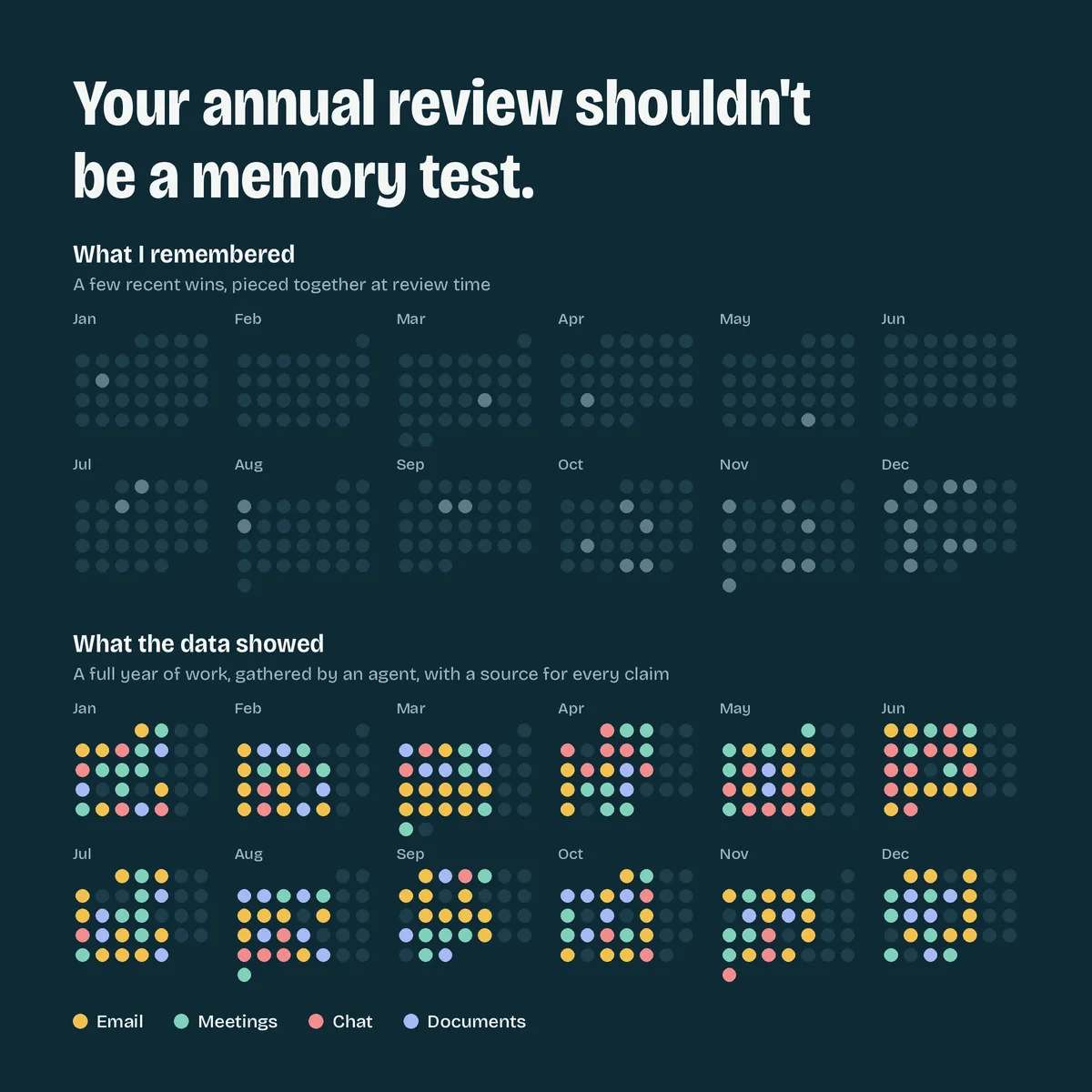
So I handed the job to an AI agent.
I already had one creating a daily brief. So I scheduled another to run once a year. It pulls from my email, calendar, chat, documents I authored, and code repositories, then writes a full summary of my year: top accomplishments and growth areas.
Setup took 2 minutes. Ongoing effort: zero.
What I learned:
→ I accomplish more in a year than I give myself credit for.
→ The growth areas are objective and actionable. Feedback from data is easier to hear and receive than feedback from a person. It feels honest, neutral and transparent.
→ Citations matter. I told the agent to back every claim with a source document, so I can verify nothing is made up.
This year, my annual review won’t be a memory test. It will be a focused, evidence-backed conversation.
Want to try it? Start with a prompt like this:
“Review my email, calendar, messages, and documents from the past 12 months. Summarize my top 5 accomplishments and their impact, identify 3 growth areas, and cite a source for every claim.” (Note: check your company’s AI and data policies first)
What prompts do you use to track your own work?